By David Pierce · liveURGENT Unbound
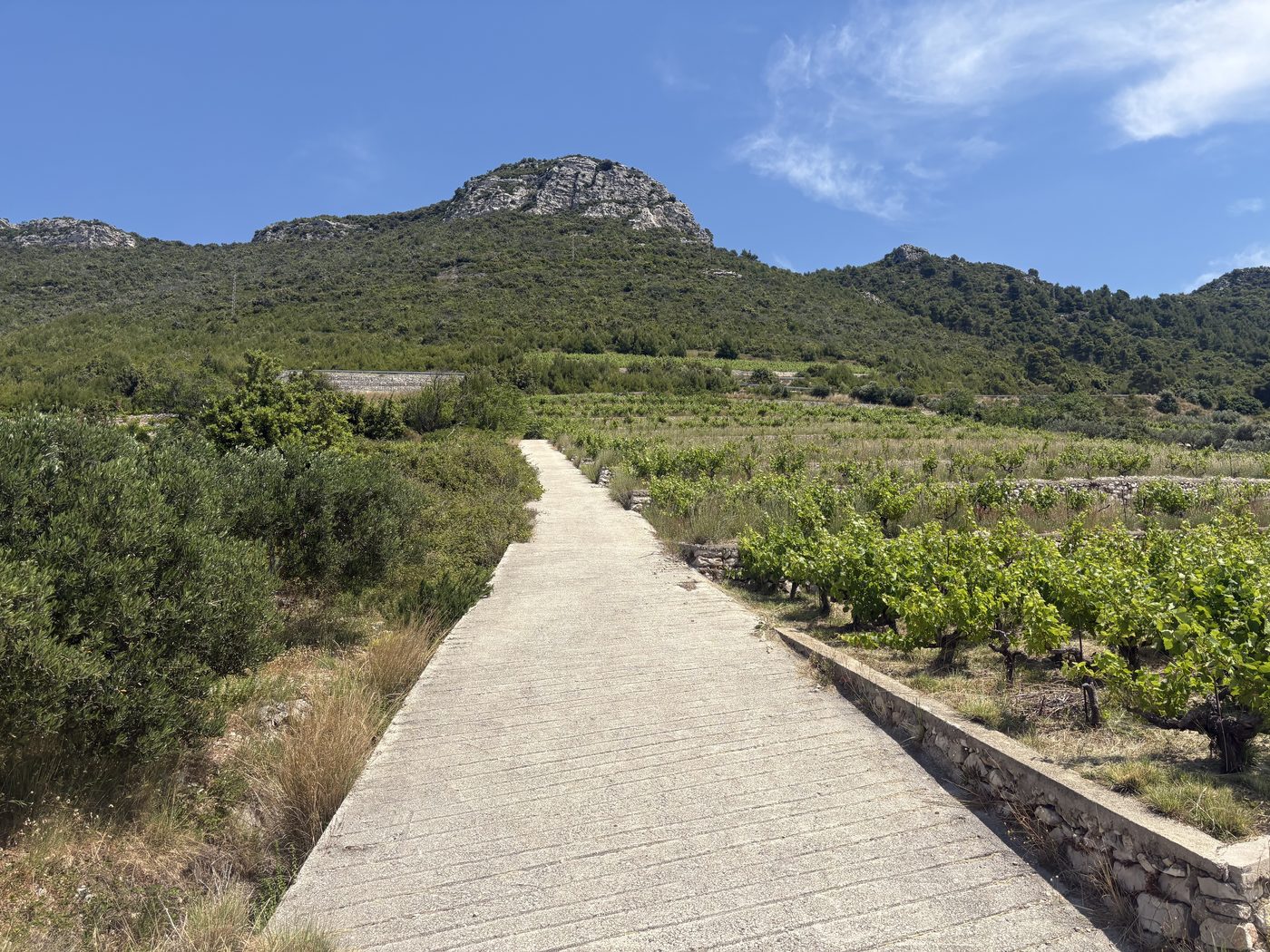
Most people meet the Pelješac Peninsula through a car window, on the coast road between Split and Dubrovnik — a long arm of hills reaching into the Adriatic, there and gone in an hour. We met it the slow way, on bicycles, on the fourth day of a five-day island ride, and it turned out to be the day the cyclists and the wine drinkers both won. This is Croatia’s serious red wine country: steep south-facing slopes, ancient grapes, and prices from another era. If you take one detour off the Dalmatian coast road, make it this one.
We spent three weeks in Croatia and Montenegro in May 2026, and Pelješac was built into the middle of the trip — the ride crossed it on its fourth day, wineries and all. Everything below is what we actually drank, bought, and ate.
The slopes that make the wine
Pelješac’s reputation rests on two appellations on its southern side: Dingač and Postup. Both are steep, sun-beaten slopes falling toward the sea, and both produce the best Plavac Mali in the country — Croatia’s signature red grape, grown hard in thin soil and reflected heat.
Plavac Mali is not a polite wine. It’s full-bodied and tannic, the kind of red that stands up to grilled fish in a way that seems wrong until it isn’t — and then it’s the only thing you want with it. That pairing shouldn’t work on paper. On a Dalmatian table, with the fish still smelling of the grill and the slope the grapes grew on visible through the window, it simply does.
The vineyards are part of the experience even before you taste anything. The appellations aren’t a valley floor you drive past; they’re hillsides you climb through, vines on both sides of the road, the Adriatic opening up at every ridge. However you cross the peninsula — bike or car — you cross the wine country, not around it.
How we got there: Day 4 of the ride
Our route onto Pelješac was the bike ride’s fourth day: Korčula island in the morning, then onto the peninsula for the run through Dingač and Postup, with winery stops built into the day. The riding is demanding — Pelješac is hilly, and the elevation adds up — but the context makes it worth every meter of climbing. There is something about arriving at a winery under your own power, with the vineyard slopes already in your legs, that makes the tasting mean more.
If you’re driving instead of riding, the advice from our trip is simple: give the peninsula a full day of its own. It sits on the coast road south from Split toward Dubrovnik, and it tempts you to treat it as a stop. Resist that. A full day lets you do what the bike day did for us — wineries at a pace, lunch in the middle, and the oysters at the base of the peninsula before you roll on. The ride itself is its own story, and the wineries were only one of the days that made it.
The wine buying strategy
Here is the single best wine value on the entire trip, stated plainly: stop at a winery and buy directly.
Miloš and Saints Hills are the names to know. Buy at the cellar door and the prices are a fraction of what you’d pay if these wines were exported — which most of them aren’t. That last part matters. This isn’t a region whose best bottles are sitting in a wine shop back home waiting for you to get around to them. The wine is here, the production is small, and the gap between the cellar-door price and the wine’s quality is the widest we found anywhere in three weeks of eating and drinking our way down the coast.
Our strategy, such as it was: taste at the wineries the day crosses, buy the bottles that stop conversation, and don’t overthink the shipping math on wine you cannot replace at home. A trip through Dingač and Postup that ends with an empty trunk is a trip half finished.
End at the oysters: Ston and Mali Ston
The peninsula’s base is guarded by two small towns with an outsized reputation: Ston and Mali Ston, home to the salt pans — and, in the clean water of the bay beside them, the best oysters on the coast.
Pair the wine day with an oyster stop; that’s not our improvisation, it’s the shape the place itself suggests. Just-shucked Mali Ston oysters with a glass of Pošip — the white grape we drank all through the islands — is one of Dalmatia’s great simple pleasures. No technique, no ceremony: cold oysters, a squeeze of lemon if you insist, and a white wine grown one peninsula away. After a day of tannic reds on steep slopes, it is exactly the right full stop.
It’s also the practical end of the day. Ston and Mali Ston sit where the peninsula meets the mainland road, so the oyster stop is the natural last act before the drive on to Dubrovnik — the city we’d point you to for the following two nights.
Plan your Pelješac day
- Give it a full day if you’re driving. The peninsula is a destination wearing a detour’s clothes. A rushed hour buys you a photo of a slope; a day buys you the wine.
- Cross it, don’t skirt it. The Dingač and Postup slopes are the point. Route through the appellations and stop at the wineries the road passes.
- Buy at the cellar door. Miloš and Saints Hills are the names to know; direct prices are a fraction of export prices, and most of these wines are never exported at all.
- Finish at Mali Ston. Oysters at the base of the peninsula, with a glass of Pošip, before the road on to Dubrovnik.
- If you’re riding, expect hills. The bike route crosses Pelješac on Day 4 and it’s one of the demanding days — demanding, and the one we’d all vote to do again.
The peninsula we’d drive back for
Every trip has a place that outperforms its billing. Dubrovnik was the headline of ours, and it earned it — but Pelješac was the surprise: the wine country we crossed at bicycle speed, bought from the cellar door, and finished with oysters at the base of the hills. Red wine country and the best oysters on the coast, in the same day’s drive. That’s a combination we’d cross an ocean for, and we’d point anyone driving this coast the same way.
Take the whole trip: Croatia & Montenegro: The Luxury-Adventure Playbook — Pelješac is one stop on the three-week route we actually took: Split, the five-day island bike ride through these vineyards, Dubrovnik, Kotor and the Bay — every stay, table, and real cost included. $29 on Gumroad.
Read next: Dubrovnik: Stay Two Nights, Not One Day · Cycling the Islands: Split to Dubrovnik by Bike · Hvar & Korčula: Where to Eat Beyond the Ride · What Three Weeks in Croatia & Montenegro Actually Cost
Disclosure: Some links on this site are affiliate links. If you book through them, liveURGENT may earn a small commission at no extra cost to you.
Leave a Reply