By David Pierce · liveURGENT Unbound
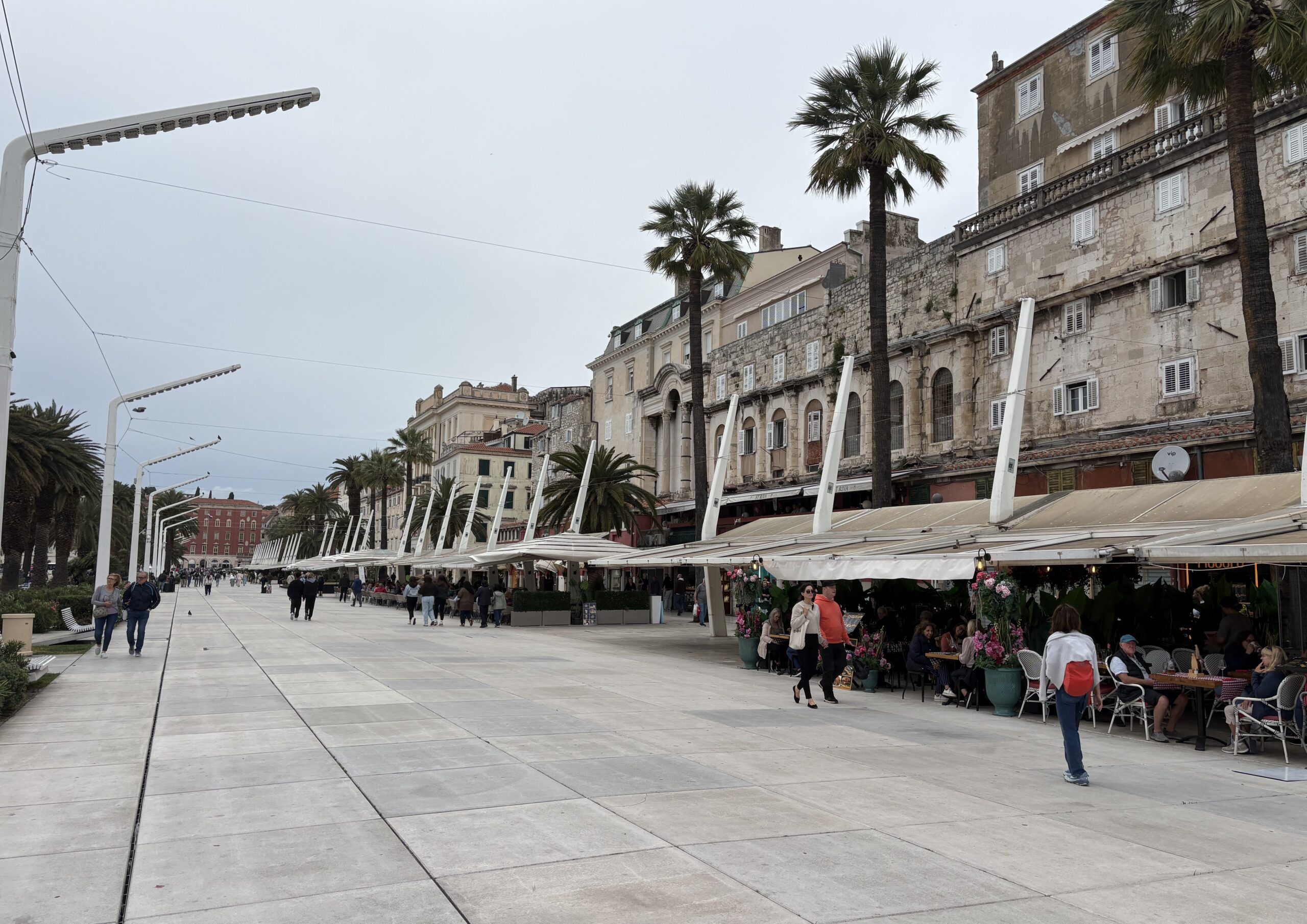
Most old towns have a historic center you visit. Split’s historic center is a Roman emperor’s palace that a whole city moved into and never left — shops, apartments, restaurants, and laundry lines inside walls that have stood for some 1,700 years. You don’t tour it and go back to your hotel. If you stay the way we did, the palace is your hotel’s neighborhood, your morning coffee run, and your walk home from dinner.
We opened our three weeks in Croatia and Montenegro in May 2026 with four nights in Split, based inside Diocletian’s Palace itself. It was the right first base for the whole trip — a working city to land in, a day trip up the coast, and the starting line for everything that came after. Here’s how we’d do Split again.
Get the address right and the rest follows
Split operates on two speeds: the Old Town — Diocletian’s Palace and the warren of streets immediately around it — and everything else. For a first visit, you want to be in or immediately adjacent to the Old Town. The difference between a hotel inside the walls and one two blocks outside is the difference between waking up in history and waking up near it.
Our base was Hotel Vestibul Palace — inside the palace itself, in a 1,700-year-old Roman vestibule. The address matters more than the brand in Split, and this one can’t be beaten on address. Rooms run smaller than American hotels at comparable rates, which is fine: you’re not meant to spend time in them. You’re meant to spend it in the palace outside the door.
What to look for wherever you land in the palace quarter: stone walls, air conditioning (essential May through September), a breakfast worth eating, and a host who answers questions. Rooftop access is a genuine differentiator — sunset over the Adriatic from a Split rooftop is one of the trip’s best moments. Expect €130–250 a night for a property that earns its rate. Anything significantly cheaper will show it.
The Riva is your compass
One landmark organizes the whole city: the Riva, the long promenade hugging the harbor, with the palace façade rising behind it. Everything radiates from it. The ferries to the islands leave from here. The best morning coffee is one block north of it. The market is a five-minute walk east. Learn the Riva on your first morning and you can navigate Split for the rest of the stay without thinking about it — palace streets for wandering, the Riva for orienting.
That’s the honest pleasure of basing here: Split rewards the traveler who slows down. It’s a living city first and a sight second — people commuting through a Roman palace, shopping in its cellars’ shadow, arguing over coffee in its squares. Give it your first days, not your leftover ones.
If you want the palace itself decoded on day one, book a private guide — the Diocletian’s Palace & Old Town walking tour runs 2.5 hours with a local guide and turns the warren into a story you can actually follow.
Eating in the palace: three tables
Zinfandel’s, at Hotel Vestibul Palace, is fine dining in a Roman atrium — you’re eating in a 2nd-century vestibule, and the food matches the room. Order the tasting menu if you have the time; otherwise the black risotto and grilled local fish. The wine list is the best in the city. This is the one reservation to make in Split — book it well in advance.
Kadena, on Ul. Kneza Domagoja near the market, was our unexpected best meal: elevated Dalmatian cooking built on local sourcing, a young chef with genuine talent, and a room quieter than the Old Town tourist spots. Order whatever the fish of the day is, and the peka if you’ve called ahead. Go on a weeknight if you can.
And Konoba Fetivi, in the Šperun neighborhood west of the palace, is the antidote to both: a traditional konoba — stone walls, simple tables, a no-nonsense menu — of the kind locals have eaten in for decades. Grilled fish by weight (ask what’s fresh), local wine by the carafe, prstaci if they’re offered. It’s the opposite of Instagram-optimized, and it fills early with locals who know. Make a reservation.
Split is also a starting line
The palace base pays off in day trips. Krka National Park and Skradin — a morning of river waterfalls and a long harbor lunch — sit about 45 minutes north, and that was one of the best days of our trip. The island ferries leave from the Riva in front of you; our own route out of Split was the start of a five-day island bike ride down the chain to Dubrovnik, which is its own story.
And when you do drive south, drive the coast. The D8 highway from Split toward Dubrovnik is legitimately one of Europe’s great drives — turquoise water on your left, limestone mountains on your right, stone villages every fifteen minutes. Don’t rush it: budget a full day, not a half day, because you will want to stop. Stops worth making: Omiš, where the Cetina river meets the sea; Brela, the postcard beach — thirty minutes, no more, no less; Makarska for a harbor lunch; Ston and Mali Ston for the salt pans and the best oysters on the coast; and the Pelješac Peninsula, where the Dingač and Postup reds are exceptional. Practical notes: fill the tank in Split, because stations thin out on the peninsula; the Pelješac bridge has eliminated the old Bosnia corridor, so the drive is seamless now; the D8 runs slow behind trucks in summer, so leave early; and stay off the A1 motorway for this leg — it gets you there faster and you will remember nothing about it.
Why Split first worked
Every long trip needs a city that teaches you how the country works. For us that was Split: four nights inside a Roman palace, coffee on the Riva, one great day trip, three memorable tables, and a coast road pointing south. Land here, slow down, learn the rhythm — early mornings, long lunches, evenings in old stone streets — and the rest of the coast opens up exactly the way it should.
Take the whole trip: Croatia & Montenegro: The Luxury-Adventure Playbook — Split is the opening base of the three-week route we actually took: the palace, Krka, the five-day island bike ride, Dubrovnik, Kotor and the Bay — every stay, table, and real cost included. $29 on Gumroad.
Start with the free one: Dubrovnik in a Day — The liveURGENT Way — the free PDF from the far end of the same trip.
The Riva on your wall: Split’s promenade is November in the Croatia & Montenegro 2027 Wall Calendar — thirteen of our own photographs from this trip. $29.99 on Etsy.
Read next: Krka & Skradin: The Easiest Great Day Trip from Split · Cycling the Islands: Split to Dubrovnik by Bike · Hvar & Korčula: Where to Eat Beyond the Ride
Disclosure: Some links on this site are affiliate links. If you book through them, liveURGENT may earn a small commission at no extra cost to you.
Leave a Reply