By David Pierce · liveURGENT Unbound
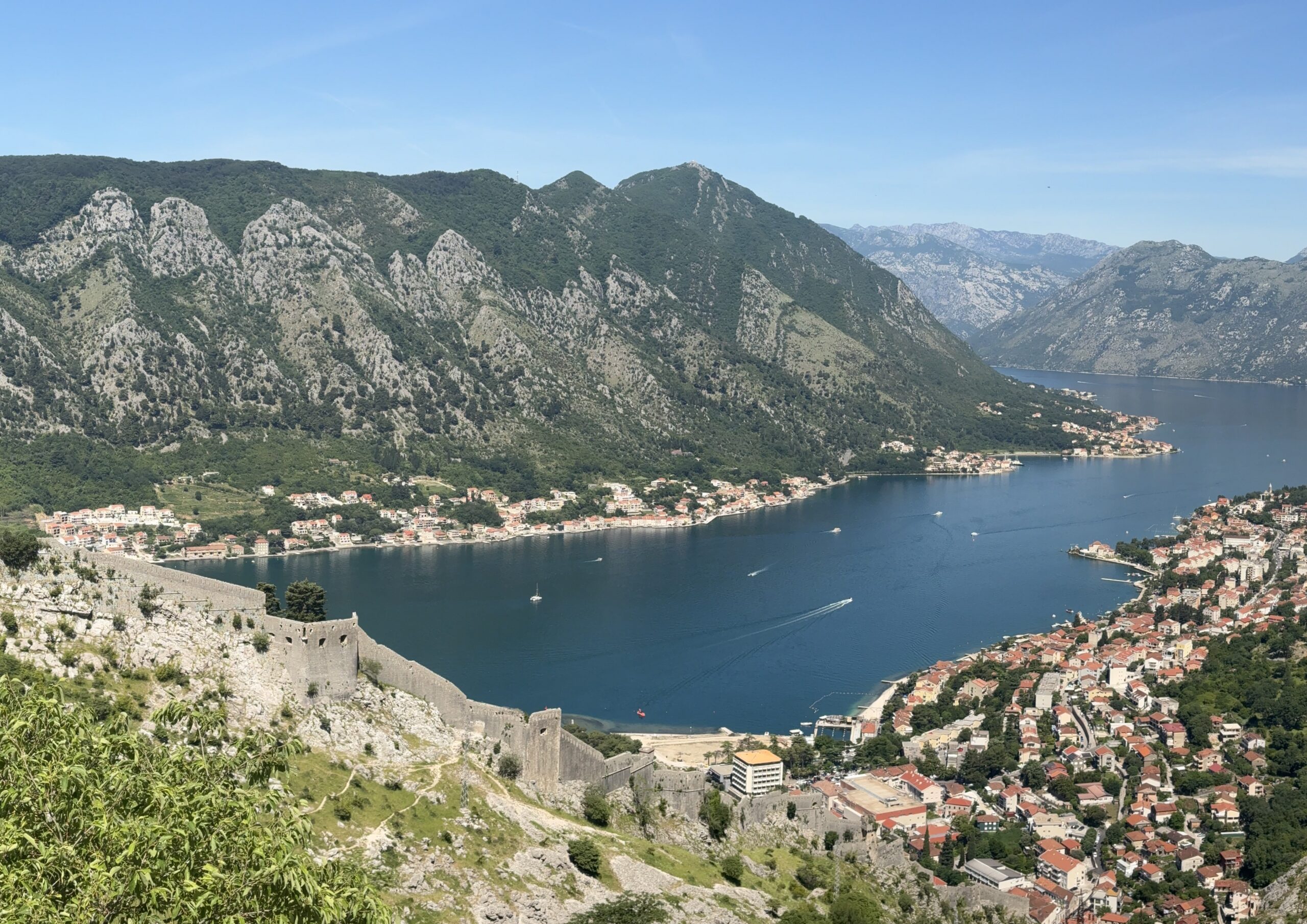
We expected a border crossing and a day trip. We got one of the most dramatic landscapes we have ever seen — and stayed longer than planned.
The Bay of Kotor, in Montenegro, is technically a fjord, which explains the drama: black mountains dropping straight into still, dark water, a medieval walled town pinned at the far end. We crossed in from Dubrovnik during a three-week trip through Croatia and Montenegro in May 2026, based ourselves on the bay for a week, and it became the half of the trip we talk about most. Here’s how to do it the way we did — and the way we’d do it again.
The arrival is the first attraction
One thing nobody told us: the drive in is part of the experience. The road from the border to Kotor wraps around the bay, and the bay itself does the introducing — impossibly still water, mountains straight out of it, and then, around one more bend, the medieval walls of Kotor appearing across the water. Have someone else driving when that bend comes. You’ll want to look, and the road wants your attention. We stayed on the bay seven nights of our three weeks, and that first circuit of the water is still the moment we’d hand to anyone who asks why Montenegro.
Base in Tivat, visit Kotor
This is our honest first recommendation, and it runs against most advice: stay in Tivat, not Kotor.
Kotor’s Old Town is wonderful to visit and tight to live in. Tivat, twenty minutes around the bay, gives you everything Kotor doesn’t — a relaxed waterfront, excellent restaurants, easier parking, and a pace that lets you breathe. Porto Montenegro, the marina development, is genuinely beautiful, with good dining and an evening promenade that became our nightly routine.
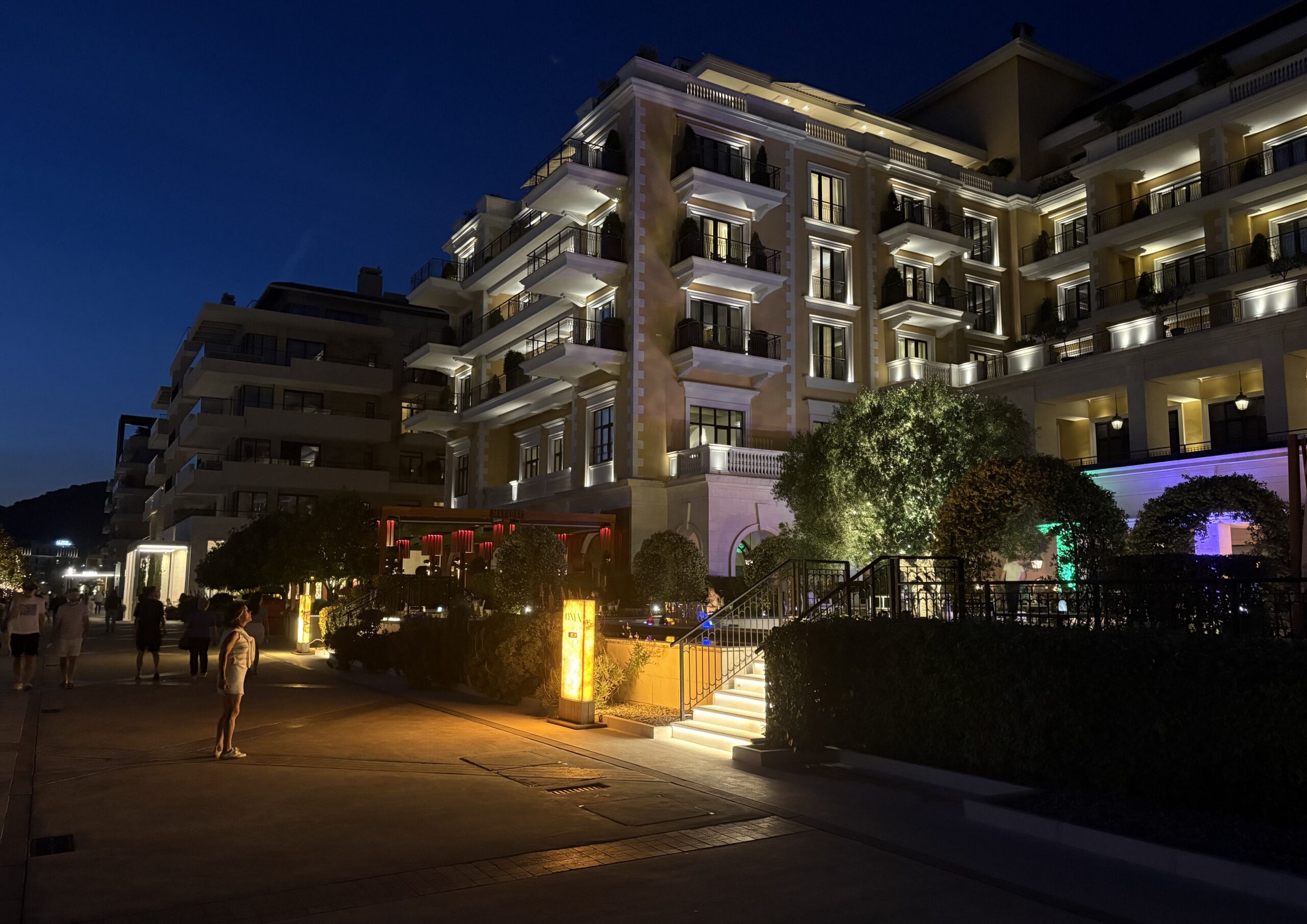
We stayed at the Hyatt Regency Kotor Bay, on the Tivat side. Expect roughly €110–300 a night in Tivat depending on the property, with Porto Montenegro at the top end. You visit Kotor; you live in Tivat. That split made the whole week work.
The fortress climb: 1,355 steps, worth every one
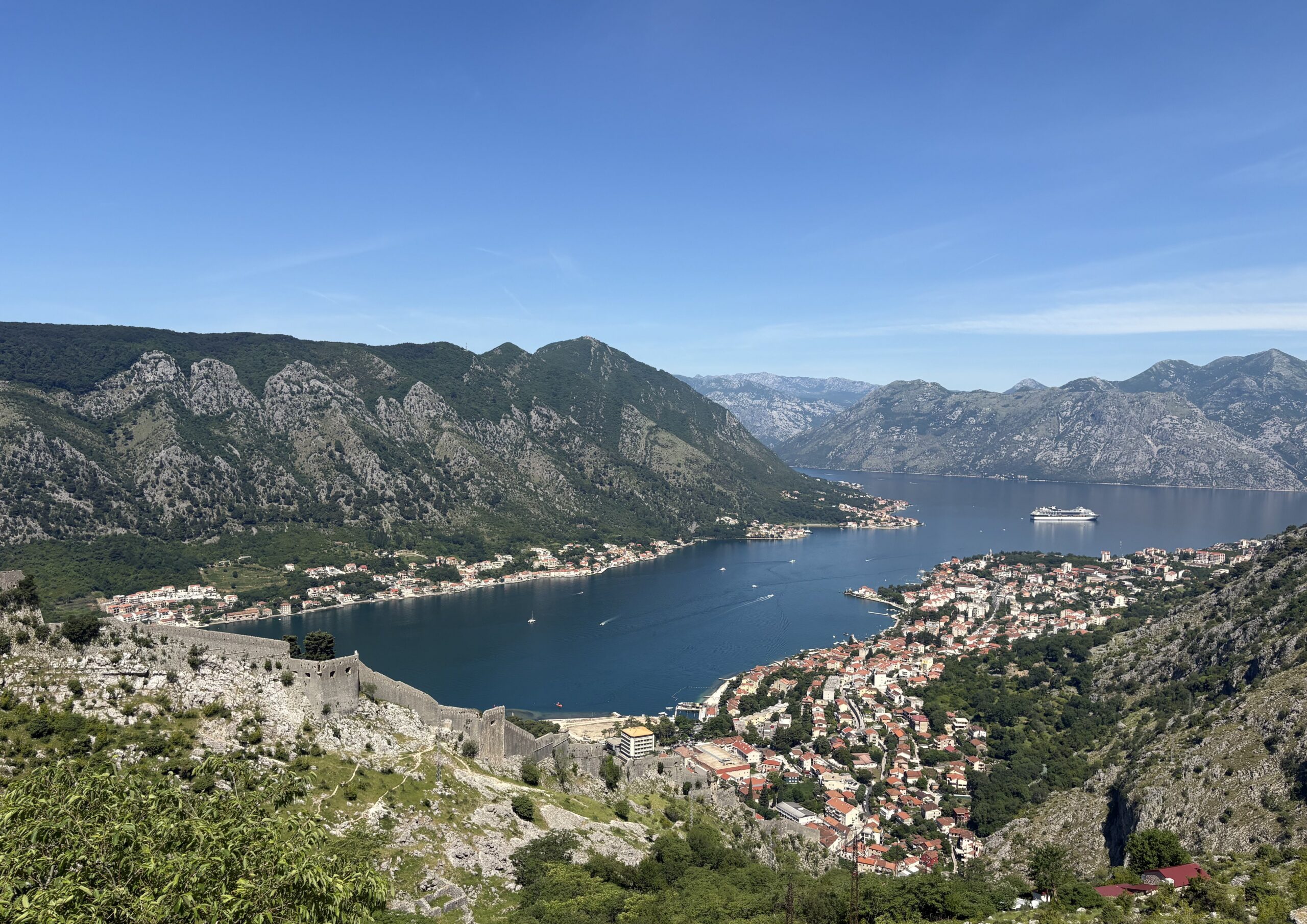
Kotor’s city walls climb the mountain behind the Old Town to the fortress of San Giovanni, and the view from the top — over the red roofs, the walls, and the whole bay — was the single best panoramic moment of our trip.
The climb is 1,355 steps and it’s steep. Budget about 90 minutes up and down, wear shoes with grip (the stone is polished), and time it like everything else on this coast: early morning or late afternoon. At 8 AM we had the walls nearly to ourselves. At midday in the heat, the same climb is a different and worse proposition.
The Old Town, and the crowd rule
Kotor’s Old Town is UNESCO-listed, smaller than Dubrovnik, less trafficked, and more authentically lived-in — locals actually live here. The main square, Trg od Oružja, is the social anchor. The cats are a cultural institution; there’s a cat museum, the cats are friendly, and everyone feeds them.
The crowd rule we learned from experience: when two or three big ships are in port, Kotor’s narrow streets go shoulder-to-shoulder. We don’t track port schedules and won’t pretend to — but your hotel will know what’s expected that day, so ask at breakfast and plan accordingly. The fix is the same as everywhere on this coast: before 9 AM or after 5 PM, the town is yours; midday belongs to the day-trippers. Practical notes: there’s no parking inside the walls (a paid lot sits just outside the main gate), the town is entirely walkable once you’re in, and Montenegro uses the euro even though it isn’t in the EU.
For dinner in Kotor, Galion — just outside the walls, on the water — is the nicest table in town: upscale seafood, white tablecloths, bay views. Book it for sunset and order the seafood risotto and the fish of the day. For the antidote, Konoba Cesarica inside the Old Town is traditional Montenegrin — smoked lamb, local cheese, Vranac wine — where you go to eat like someone who lives here. Arrive early or late; they don’t take reservations.
Perast & Our Lady of the Rocks: a half day, minimum
Twenty minutes north of Kotor, on a road that hugs the water, sits Perast — a small baroque town with one main street along the bay and the best-preserved baroque architecture in the region. It deserves a half day minimum, and we’d argue for a full slow one.
The signature experience is the water taxi out to Our Lady of the Rocks, a man-made island with a 17th-century church, built stone by stone by sailors leaving rocks in thanksgiving for safe passage. The church interior is covered in ex-votos — silver plaques, paintings, offerings left over centuries — and it is genuinely moving in a way that surprised us both. Water taxis run €5–8 per person, negotiated at the dock; go before 10 AM or after 4 PM.
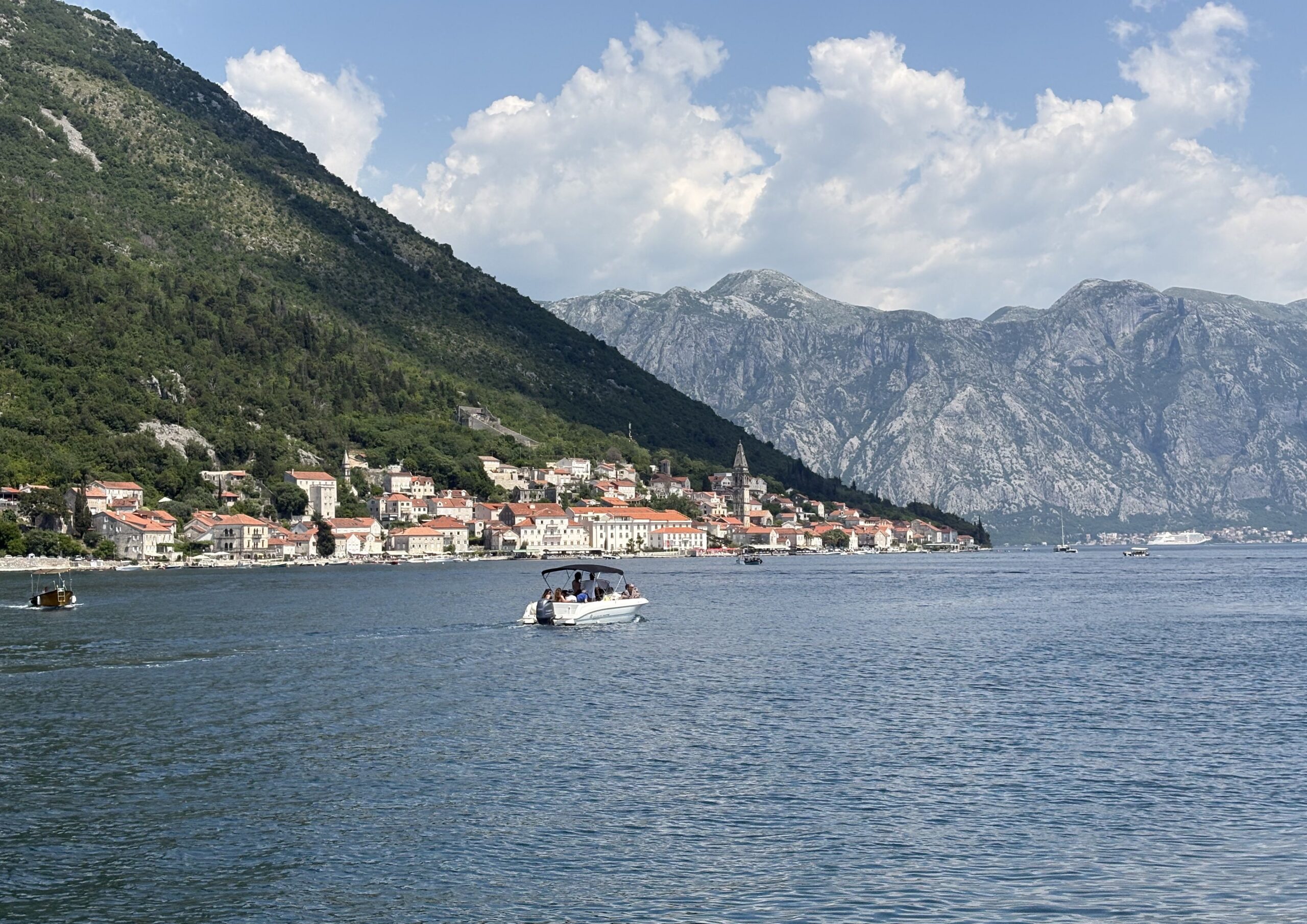
Then lunch, at a waterfront table, with no particular schedule. Per Agio, on the Perast waterfront, was the best lunch table of our entire trip — fresh fish, local wine, the bay in front of us. The combination is as close to a perfect afternoon as travel offers. Drive back via the upper road for a completely different perspective on the bay.
Lovćen: the switchbacks above the bay
If you have a day for the mountains, the road from Kotor up to Lovćen National Park is spectacular — and, honestly, the most stressful driving of the trip. It’s a narrow, single-lane mountain road with switchbacks and sections without guardrails; oncoming traffic sometimes means one car backing up. Go slowly, use your horn on blind corners, and don’t attempt it after dark or in the wet.
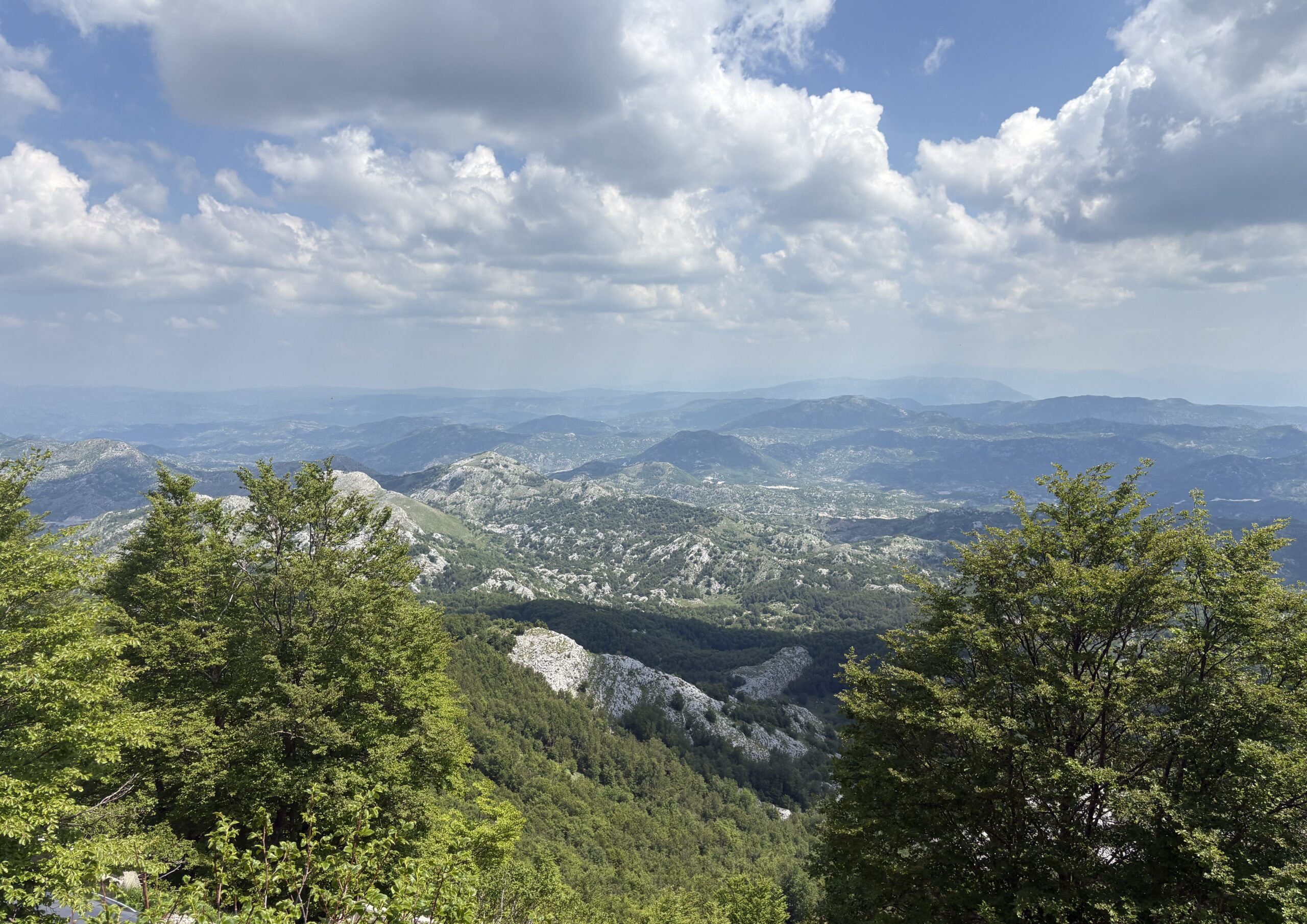
The reward is the whole Bay of Kotor laid out below you from altitude. The natural halfway stop is the village of Njeguši, famous for its mountain prosciutto and cheese — the obvious lunch break if your timing works. We drove the road for the views rather than the stops, and the views alone justified it. Just go in with your eyes open.
Why the bay works
Montenegro is early in its life as a luxury travel destination, which means the prices are still reasonable, the crowds are manageable, and the experience feels genuine in a way parts of the coast no longer do. Our advice is simple: go now, before that changes. Base in Tivat, climb the fortress early, take the boat to the island church, eat the long lunch in Perast, and let the bay set the pace.
Take the whole trip: Croatia & Montenegro: The Luxury-Adventure Playbook — this Bay of Kotor week is the back half of the three-week route we actually took, with Split, the island bike ride, and Dubrovnik before it — every stay, table, and real cost included. $29 on Gumroad.
Start with the free one: Dubrovnik in a Day — The liveURGENT Way — the free PDF from the Croatia half of the same trip.
The Bay on your wall: the Croatia & Montenegro 2027 Wall Calendar opens with Kotor’s fortress in January and the bay in June — thirteen of our own photographs from this trip. $29.99 on Etsy.
Read next: Dubrovnik: Stay Two Nights, Not One Day · Perast & Our Lady of the Rocks: A Half Day, Minimum · Lovćen: The Switchbacks Above the Bay · Driving Montenegro: The Border, the Rental Car, and the Insurance That Saved Us · Krka & Skradin: The Easiest Great Day Trip from Split
Disclosure: Some links on this site are affiliate links. If you book through them, liveURGENT may earn a small commission at no extra cost to you.